
Compare Online Brokers
and Trading Platforms -
Without the Hype.

Independent broker reviews, platform comparisons, and trading
education built on research - not advertising revenue.
We cover the fees, the regulation, and the fine print so you can make
a clear-eyed decision.

Independent Reviews No broker influences our ratings or rankings.
Published Methodology See exactly how we score every platform.
Regularly Refreshed Data updated when conditions change.

Latest Articles

View All Articles →

Before Your First Trade

Six steps every beginner should complete before placing a real trade.

01
Learn the Basics
Understand how online trading works before risking real money.
02
Practice on Demo
Train with virtual funds and build confidence without financial risk.
03
Set Your Risk
Learn position sizing and how to protect your trading balance.
04
Choose a Broker
Compare trusted platforms and find the one that fits your goals.
05
Learn a Strategy
Pick one simple method and practice it until it becomes consistent.
06
Ready to Start
Review the checklist and begin with a clear, structured plan.

Frequently Asked Questions

Answers to the questions every beginner trader asks.

TraderRanker is an independent financial media and research platform covering online trading platforms, broker reviews, trading education, strategies, and risk management. We publish objective, research-based content to help traders at every level evaluate their options. We are not affiliated with any brokerage, and no broker pays to appear on our site or influence our ratings. All content is for informational purposes only and does not constitute financial advice.
Our editorial team evaluates platforms across a consistent set of criteria: regulatory status, account minimums, fee structure, available markets, platform usability, educational resources, customer support quality, and withdrawal reliability. We research each broker independently using publicly available information, regulatory filings, and user feedback. Our rating methodology is published on the site so readers can understand exactly how scores are calculated.
No. TraderRanker is an informational and educational resource, not a licensed financial advisor, broker, or investment firm. Nothing on this site should be construed as a recommendation to buy, sell, or trade any financial instrument, or to open an account with any specific platform. Trading involves substantial risk. Always consult a licensed financial professional before making any investment or trading decisions.
Yes. Our editorial team operates independently from our commercial relationships. While TraderRanker may earn referral fees from some platforms, this does not influence our review scores, rankings, or editorial conclusions. We disclose affiliate relationships transparently. Brokers cannot pay to improve their scores or ranking positions on this site. Our reviews reflect independent research and analysis.
Start with the basics: What markets and instruments does it offer? What are the fees — including commissions, spreads, and inactivity charges? Does it have a platform that fits your experience level? And is customer support accessible? There is no single platform that suits every trader. The right choice depends on your goals, experience, and the instruments you plan to trade.
Most importantly: trading involves real risk of loss, and most retail traders lose money, particularly when starting out. Before trading with real capital, understand the instruments you plan to trade, the fees involved, and how losses are managed. Use a demo account to practice without financial exposure. Build a basic understanding of risk management — specifically, how much capital you are prepared to lose on any single trade — before committing real funds.
Minimum deposit requirements vary widely — some platforms allow you to open an account with as little as $0, while others require $500, $1,000, or more. However, the minimum deposit is not the same as the appropriate amount to trade with. A more useful question is: how much can you afford to lose without affecting your financial stability? Never fund a trading account with money you cannot afford to lose entirely.
A demo account lets you practice trading with virtual money in a simulated market environment, without risking real capital. Most reputable platforms offer them. For beginners, a demo account is a valuable tool for learning how a platform works, testing strategies, and understanding how trades execute — before any real money is involved. Note that demo trading does not fully replicate the psychological experience of trading with real funds.
It depends on the instruments you trade and the platform. With standard stock investing, you cannot lose more than your initial investment. With leveraged products — including margin trading, futures, CFDs, and certain options strategies — losses can exceed your deposit. Many regulated platforms are required to offer negative balance protection for retail clients, which caps your loss at your account balance. Confirm whether this protection applies before trading leveraged instruments.
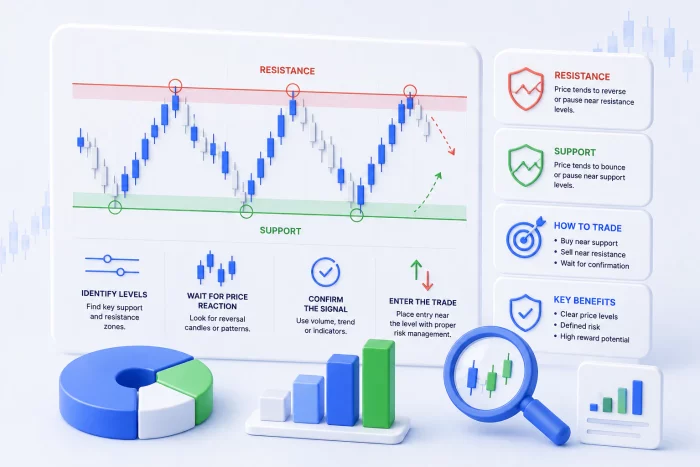
There is no universally "best" strategy, and no approach eliminates risk. Beginners are generally better served by simpler, rule-based approaches — such as trend following, support and resistance frameworks, or moving average crossovers — before attempting more complex methods. The most important starting point is not strategy selection, but position sizing and defining your maximum acceptable loss before entering any trade.
Risk management is the foundation of sustainable trading. Without it, even a strong strategy can result in account-destroying losses. Core principles include: never risking more than a defined percentage of your account on a single trade, always using stop-loss orders, and understanding your risk-to-reward ratio before entering a position. Traders who survive long enough to improve are almost always those who prioritized capital preservation over maximizing short-term returns.
Still have questions?
Explore our beginner guides and learn trading step by step.

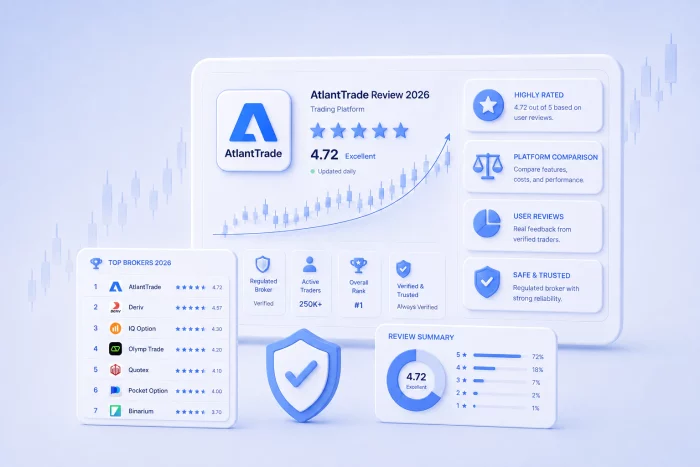
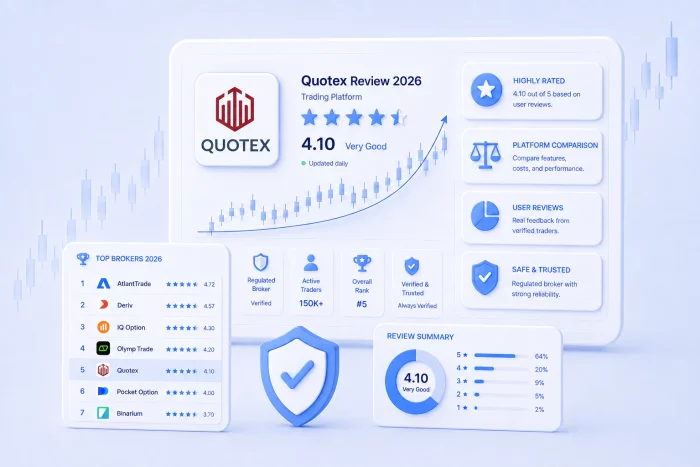
2026 Broker Rankings

Updated daily

View all →
1
Atlant Trade
Trading Platform
4.72
★ ★ ★ ★ ★
2
Deriv
Trading Platform
4.57
★ ★ ★ ★ ★
3
IQ Option
Trading Platform
4.30
★ ★ ★ ★ ☆
4
Olymp Trade
Trading Platform
4.20
★ ★ ★ ★ ☆
5
Quotex
Trading Platform
4.10
★ ★ ★ ★ ★
6
Pocket Option
Trading Platform
4.0
★ ★ ★ ★ ☆
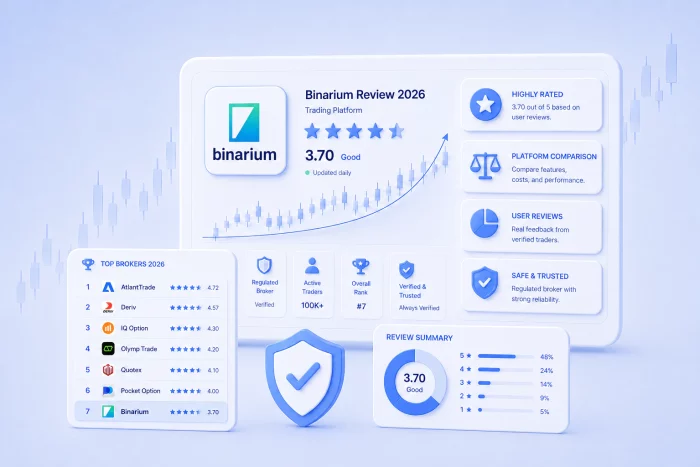
7
Binarium
Trading Platform
3.70
★ ★ ★ ★ ☆
Market Snapshot
Live
EUR/USD
1.0821
▲ +0.30%
BTC/USD
67,420
▲ +1.12%
Gold
2,341
▲ +0.18%
S&P 500
5,892
▼ −0.05%

Compare Trading Platforms. Make Smarter Decisions.

TraderRanker is an independent financial media and research platform built for traders at every level — from someone opening their first brokerage account to an active trader evaluating a new platform for a specific strategy.

We publish in-depth broker reviews, side-by-side platform comparisons, educational guides, trading strategy breakdowns, and risk management resources. Everything on this site is written to inform — not to sell.

Disclaimer: All content on TraderRanker is for informational and educational purposes only. It does not constitute financial advice, a solicitation to buy or sell any security, or a recommendation to open an account with any broker. Trading and investing carry significant risk, including the potential loss of all capital invested. Always conduct your own research and consult a licensed financial professional before making any trading or investment decision.

What TraderRanker covers

Broker Reviews
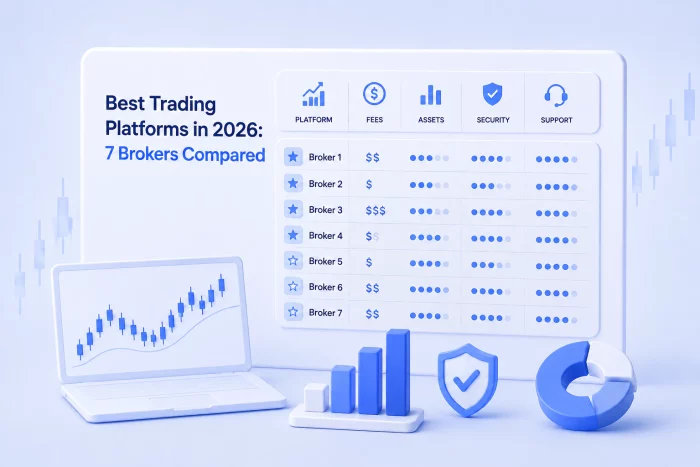
We evaluate trading platforms across the metrics that actually matter for everyday traders: account minimums, commission structures, available markets, platform usability, customer support quality, and — where applicable — regulatory standing. Each review reflects independent research, not promotional placement.

Platform Comparisons
Choosing between two platforms is rarely straightforward. Our comparison pages put brokers side by side across the same criteria, so you’re comparing apples to apples rather than reading two separate marketing pages.

Trading Platform Rankings
Our «Best of» lists are built around a published methodology with defined ranking criteria. We explain what we measured and why — because a ranking without a methodology is just an opinion.

Trading Education
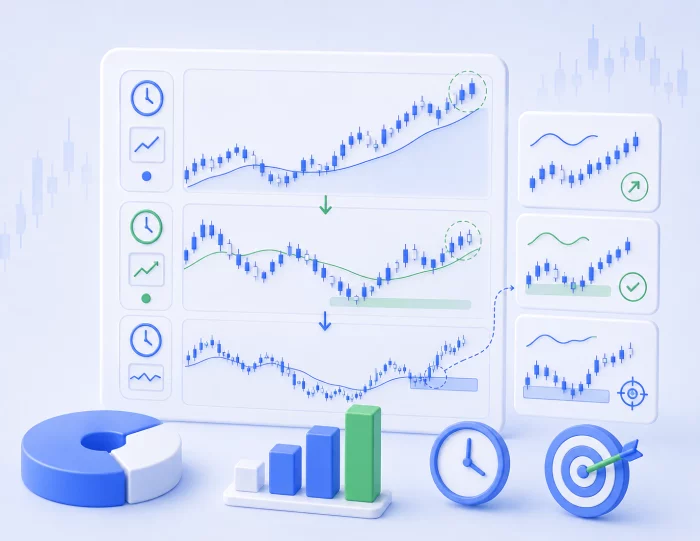
Markets are complex. Our educational library covers the fundamentals — how order types work, what technical indicators measure, how leverage functions — through to more advanced topics like multi-timeframe analysis, position sizing frameworks, and the mechanics of different derivatives.

Trading Strategies
We break down widely used strategies — trend following, support and resistance, RSI-based setups, MACD applications, price action trading, and more — with clear explanations of how they work, what conditions they suit, and what risks they carry. We do not claim any strategy is reliably profitable.

Risk Management
Risk management is the part of trading education that gets the least attention and causes the most damage when ignored. Our risk management section covers position sizing, stop-loss placement, drawdown analysis, and the psychological dimensions of managing losing trades.

Financial Glossary
Trading terminology is dense. Our glossary defines over 150 terms — from bid-ask spread and leverage to implied volatility and margin call — in plain language, with examples and links to relevant educational articles.

Why TraderRanker

Independent editorial policy. No broker pays for a higher rating or better placement on this site. Our review scores and rankings are determined by our research criteria, not by commercial relationships.

Methodology published, not hidden. We explain how we evaluate platforms before we list rankings. You can read exactly what we tested, how we weighted each criterion, and what we found.

Risk-first framing. Every review, comparison, and ranking page on this site includes clear information about the limitations and risks of each platform alongside its strengths. We believe you can only make an informed decision with both sides of the picture.

Written by practitioners, edited for accuracy. Our team includes traders and financial journalists. We look at actual platform interfaces, read regulatory filings, and track user complaint patterns — not just what brokers say about themselves on their own websites.

No hype, no guarantees. You will not find phrases like «earn passive income,» «guaranteed returns,» or «risk-free trading» on this site. These claims are not consistent with how financial markets work, and we don’t use them.

Who this site is for

TraderRanker is useful for:

  • New traders researching how to open a first brokerage account, what an account minimum means in practice, and how to evaluate whether a platform is regulated
  • Intermediate traders comparing platforms to find better charting tools, lower commissions, or access to markets not available on their current broker
  • Active and day traders looking for platform-level detail — order execution quality, available order types, margin rates, and data feeds
  • Investors researching specific instruments — forex pairs, ETFs, options, CFDs, futures — who want to understand which platforms support those markets and under what regulatory framework
  • Anyone learning to trade who wants educational content written in plain English, without the agenda of a broker’s own education center

A note on high-risk trading instruments

Some platforms reviewed on this site offer access to high-risk instruments including leveraged CFDs, futures contracts, options, and — in certain international jurisdictions — digital and binary options contracts.

These instruments are not suitable for most retail investors. Losses can equal or exceed initial deposits. Binary and digital options are banned for retail clients in the European Union and are heavily restricted or unavailable in the United States.

Where we cover platforms offering these instruments, we do so in an informational context — explaining how they work, what risks they carry, and what regulatory framework (if any) applies — not as a recommendation to trade them.